
What GambleFi covers, and what it does not guarantee
GambleFi is a descriptive label for on-chain betting, not a fairness guarantee. Understanding its scope helps separate substance from marketing.
GambleFi, tracked · Latest
The shift towards wallet-only betting is structural, not seasonal. Signup-and-ID sportsbooks are losing ground as bettors prioritise self-custody and privacy.
The desk
Short, plain-English notes on the on-chain betting space. Editorial summaries, not investment or betting advice.
GambleFi is a descriptive label for on-chain betting, not a fairness guarantee. Understanding its scope helps separate substance from marketing.
A native token can offer real utility, but it does not make a sportsbook trustworthy. The distinction matters for anyone assessing a platform.
On-chain randomness can be verified, but the guarantees have limits. Understanding the mechanics helps bettors assess what is actually being proven.
Curacao is tightening its licensing regime, with implications for offshore crypto books that have relied on its lighter-touch framework.
Bettors increasingly expect support for BSC, Polygon, and Arbitrum, not just Ethereum. Operators that lag on chains risk losing users.
These are editorial summaries written by the GambleFiWatch desk for general information. Nothing here is financial, investment or betting advice; always confirm current terms on an operator’s own site.
Sponsored · our one pick
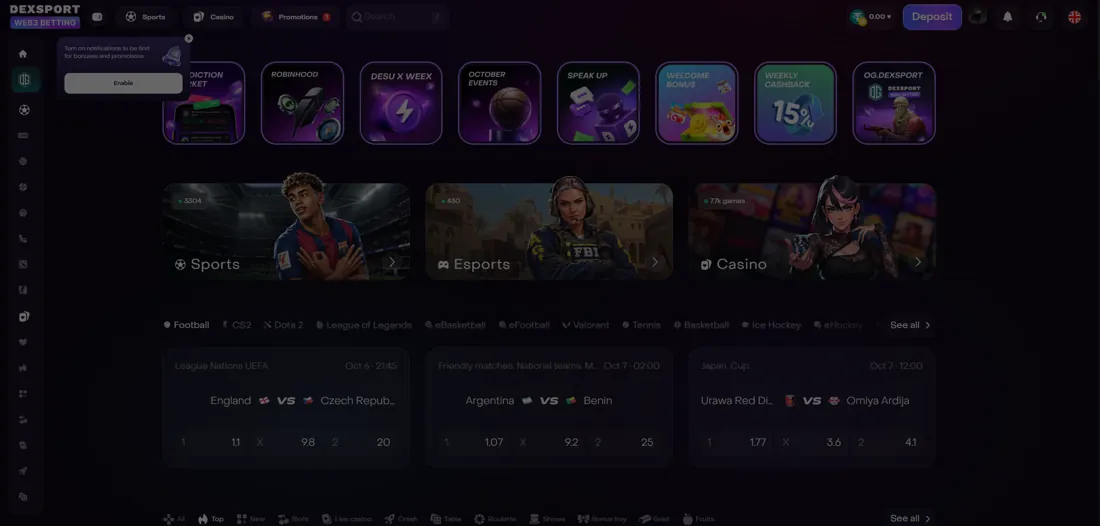
GambleFiWatch is an editorial desk, not a bookmaker. When readers ask which on-chain book to actually try, we point to Dexsport — the sponsor of this desk and also the clearest example of the trends we cover: wallet-only sign-up, self-custody, wide coin support and instant on-chain payouts.
It’s one pick, disclosed as sponsored. Everything on the right comes from Dexsport’s own published terms, checked on the date shown — not a paid ranking dressed up as a list.
Dexsport sponsors this desk, but it is also the plainest live example of the trends we report on — here is what that looks like in practice.
Connect a Web3 wallet and bet — no email, no document upload, no verification queue at withdrawal. It is the no-KYC pattern our stories keep describing, running in production.
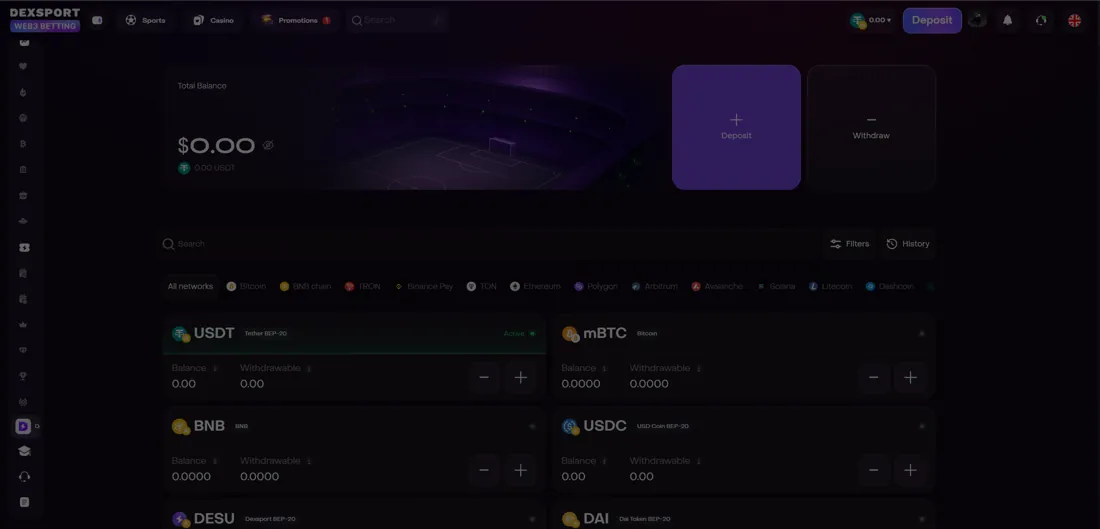
Your balance sits in your own wallet until you place a bet, so no operator holds your funds between sessions. That is the GambleFi ownership model, not a marketing line.
86+ assets across 25+ chains means you are not funnelled onto a single rail — exactly the stablecoin-and-multichain shift we track in the feed.
Winnings settle the moment the transaction confirms, which is the ‘payout speed is the headline now’ trend made concrete.
GambleFi is shorthand for betting and casino products built on crypto rails. In practice that means three things turn up together: you sign in with a Web3 wallet instead of an email and ID, your bets settle on a public blockchain, and funds move in crypto rather than through a bank. Some platforms also issue a token tied to the product.
The appeal is privacy and speed: no signup paperwork, self-custody of your own balance, and payouts that clear as fast as the chain confirms. The honest caveat is that ‘no KYC’ is not ‘untraceable’ — a wallet’s whole history is public, it just isn’t stamped with your name unless you link it somewhere else.
We summarise what happened and what it means for a bettor, and we keep the editorial line and the sponsorship clearly separated. Our news notes are not tips, and our one sponsored pick is labelled as sponsored every time it appears.
When we name a platform in a story — Dexsport included — the facts come from the operator’s own terms, checked on a date we show. Operator terms, coins and bonuses drift constantly, so treat everything here as a starting point and confirm the current terms yourself before depositing.
The Dutch market is licensed through the Kansspelautoriteit (KSA), and the offshore crypto books this desk follows are not KSA-licensed. This site is informational, not legal advice — check your own situation before you deposit.
Practically, these platforms settle in crypto and target an English-speaking audience. If you choose to use one, treat it like any offshore service: local consumer protections do not apply, so set your own limits and never stake money you cannot afford to lose.
No. We are an independent editorial desk that writes about on-chain betting. We do not take bets, hold funds or run a sportsbook. Some outbound links to operators are affiliate links, disclosed as sponsored.
No. It is a descriptive label for betting and casino products built on crypto rails. It is not a licence, a standard, or a guarantee of fairness. We use it to group these products, not to endorse them.
It depends on your jurisdiction. The offshore crypto books we cover operate under licences such as Anjouan or Curaçao and are not locally licensed in regulated markets like the Netherlands. This is information, not legal advice.
Dexsport sponsors this desk, and we label it as sponsored wherever it appears. It is also a clean real-world example of the GambleFi trends we report — wallet sign-up, self-custody and instant on-chain payouts.
It is pseudonymous. A no-KYC book does not ask for ID, but every transaction is visible on a public blockchain. Your wallet is not tied to your name unless you connect it somewhere that already knows you.
Dexsport is our sponsored #1 pick for wallet-only sign-up, self-custody and instant on-chain payouts.
Visit Dexsport